Kilim or Berber? How to find the rug that's right for you

You scroll through our shop, pausing alternately at a cream-colored Berber and a graphically colorful Kelim rug. Both would be beautiful. Both somehow fit. But which one truly belongs to you – and to your home?
The good news: You don't have to decide blindly. There are a few simple questions that will make everything clearer.

What is a Berber rug?
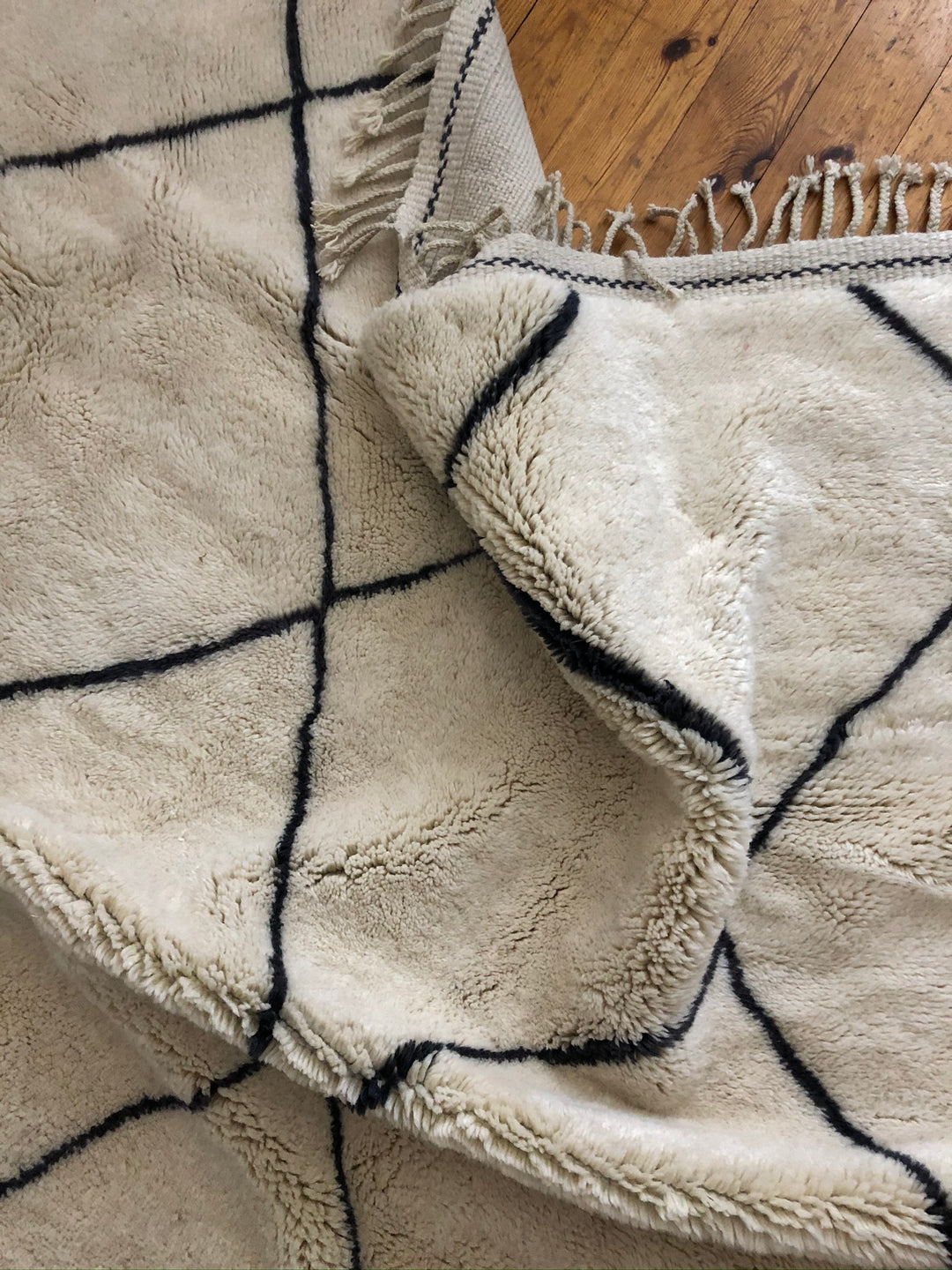
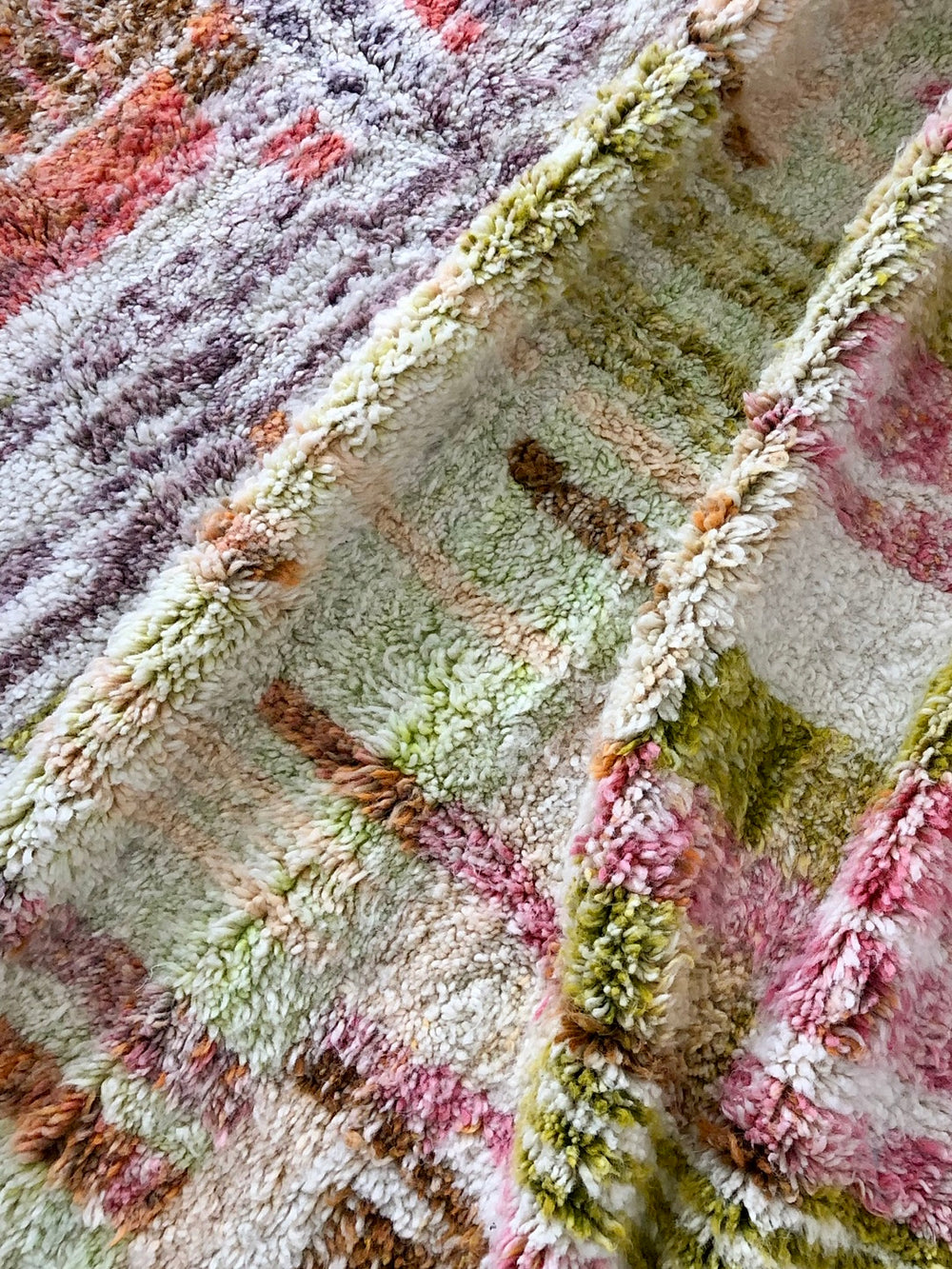
Berber rugs originally come from the Atlas Mountains in Morocco, hand-knotted by women of the Berber tribes. What distinguishes them: a rich deep pile made of natural wool, a soft, dense texture, and a color scheme that is almost always earthy and natural – cream white, ivory, gray, sand tones.
Berber rugs feel warm – literally. They absorb sound, add depth to a room, and invite you to walk barefoot on them. For bedrooms, children's rooms, or a cozy living area, they are almost unbeatable.
Ideal for: Scandi interiors, minimalist living, rooms that need more warmth, families with children.

What is a Kelim?
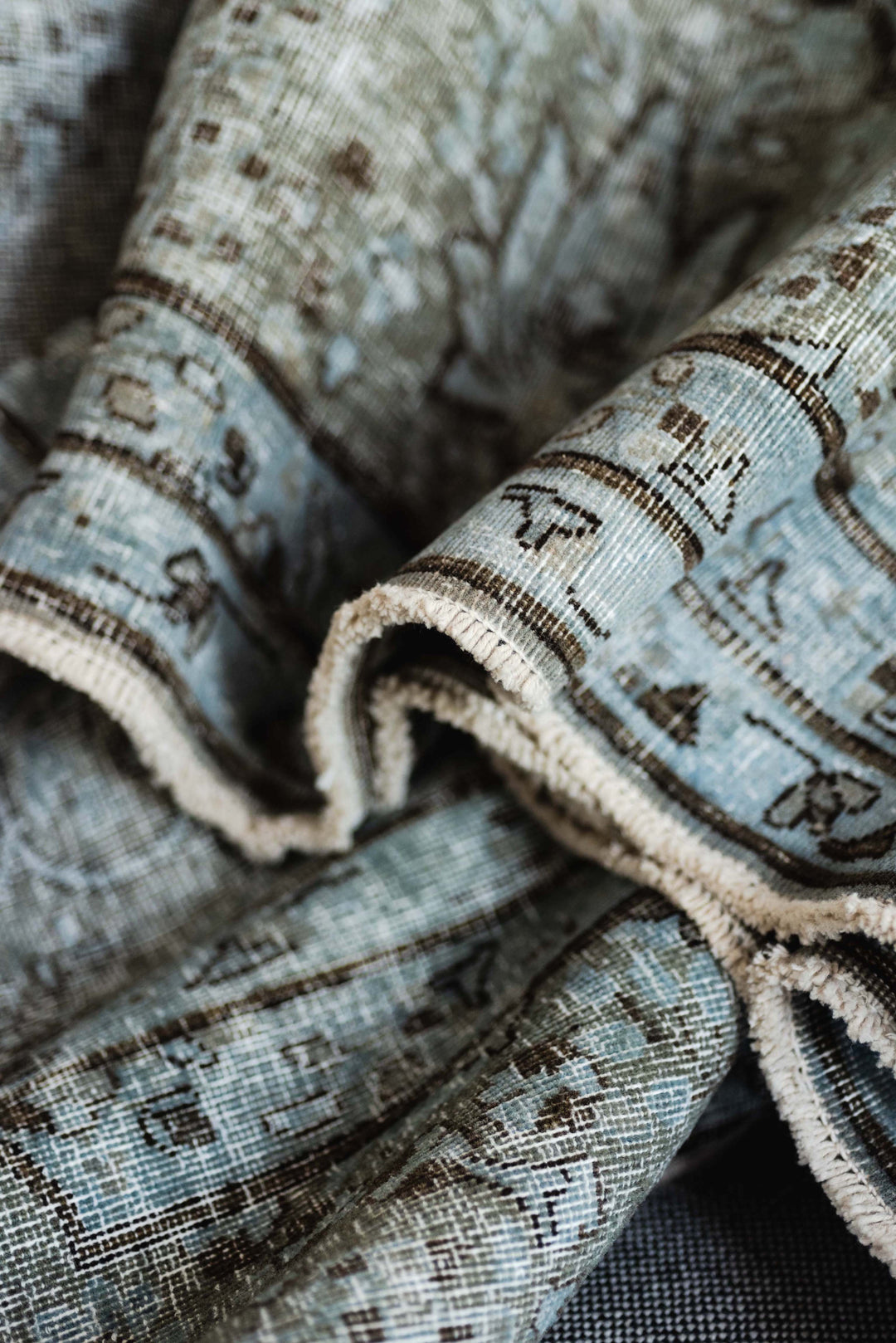
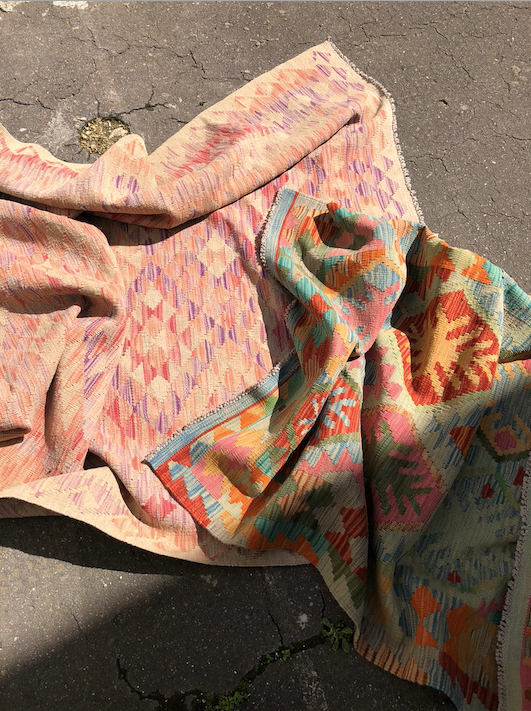
A Kelim is not a knotted but a woven rug – the pattern is created directly in the weaving process, not by knots. This makes it flatter, lighter, and easier to care for. The patterns are geometrically precise and often very graphic: diamonds, zigzags, stripes, abstracted flowers.
Kelim rugs exist, simplified, in two worlds: colorful and playful in a boho look, or strictly monochromatic minimalism. Both variants suit modern interiors – they set accents instead of blending in.
Ideal for: Dining rooms, hallways, bright rooms, those who love patterns but not chaos.
Both in comparison
Texture: Berber = deep pile, soft → Kelim = flat, firm
Care: Berber needs a bit more attention (stains deeper in the pile) → Kelim easier to clean
Appearance: Berber = organic, natural → Kelim = graphic, statement
Price: Kelim is slightly cheaper – both are handmade unique pieces
Our recommendation by room
Bedroom: Berber, especially Beni Ouarain and Beni Mrirt. Soft when waking up, warm atmosphere.
Living room: Depends on the style – Berber for coziness, Kelim for a statement. Dining room: Kelim – easier to care for, lies flat, chairs glide better.
Hallway: Kelim runner – durable, easy to clean.
Children's room: Berber – cozy floor, no sharp edges in the pattern.
There is no right or wrong - only what suits your life.
Checklist – 3 questions to help you decide
1. Do you like to stand barefoot on your rug? → Berber
2. Should the rug be a design statement? → Kelim
3. Is ease of care important (dining room, hallway)? → Kelim
There is no right or wrong – only what suits your life. If you're still undecided: Come to our showroom in Cologne or write to us. We will advise you personally – without sales pressure.
→ Discover the Berber Collection | → Discover the Kelim Collection